
Cathodic protection is an engineering technique that prevents the corrosion of metal structures by converting the metal to be protected into the cathode of an electrochemical cell. It is used in buried pipelines, tank farms, offshore infrastructure, and any metal installation in contact with an electrolyte —soil, water, or seawater— where corrosion could compromise the safety or service life of the asset.
At Procainsa, we have been designing and installing cathodic protection systems for the Oil & Gas, petrochemical, and critical infrastructure sectors for over 35 years. In this article, we explain what it is, how it works at a technical level, and what types of systems exist.
What is cathodic protection?
Cathodic protection is an electrochemical method of corrosion control. Its principle is simple: the corrosion of a metal is, in essence, an electrochemical reaction in which the metal loses electrons (oxidizes) when in contact with an electrolyte. If we manage to make that metal receive electrons from an external source instead of giving them up, the oxidation reaction slows down or stops completely.
That is exactly the objective of cathodic protection: to convert the metal structure we want to protect —a pipeline, a tank, a pile— into the cathode of the system, so that another element oxidizes in its place.
How does cathodic protection work?
For a metal structure to behave as a cathode, it needs to receive a continuous protective electric current. This current can come from two different sources, which give rise to the two main types of cathodic protection:
- A more reactive metal that sacrifices itself in its place (sacrificial anodes), or
- A controlled external electric current source (impressed current cathodic protection).
In both cases, the circuit is completed through the electrolyte —the soil, the water— and the result is the same: the protected structure stops losing electrons, and its corrosion is drastically reduced, in many cases to practically negligible levels throughout its design life.
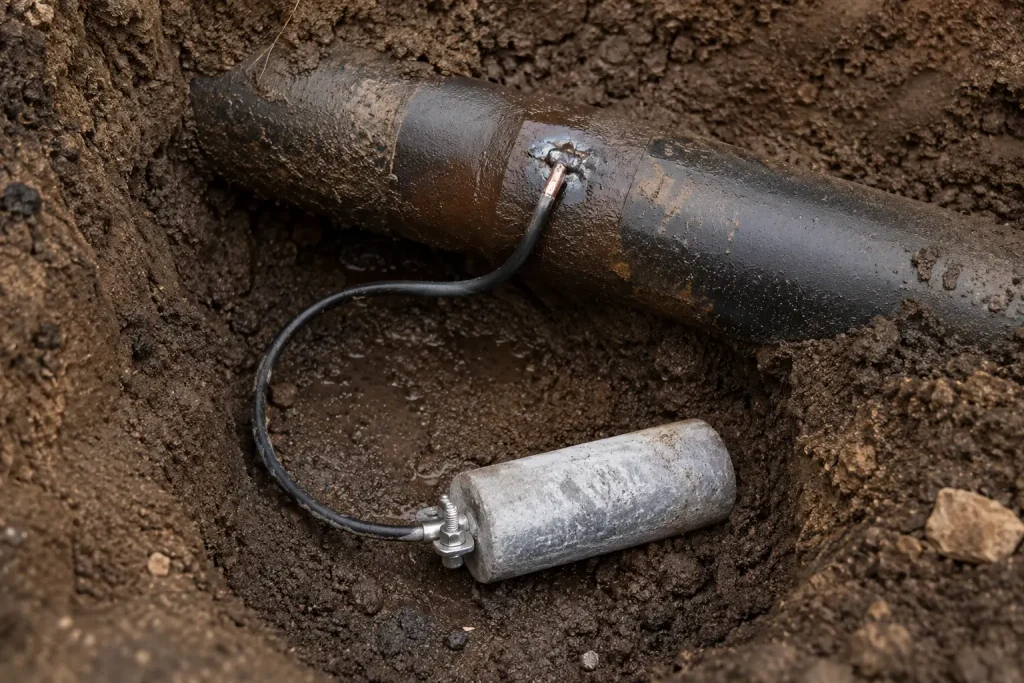
Types of cathodic protection
Sacrificial anode cathodic protection (galvanic protection)
Anodes of a more active metal (zinc, magnesium, or aluminum) are installed, electrically connected to the structure. The anode corrodes in a controlled manner and donates electrons to the protected structure. It does not require an external power source, making it common in medium-sized installations or where no electricity supply is available.
Impressed current cathodic protection
It uses an external power source (rectifier) that imposes a controlled direct current towards the structure through inert anodes (graphite, activated titanium, iron-silicon). This allows for the protection of large structures —gas pipelines, oil pipelines, entire tank farms— with precise control over the applied protection level.
The choice between one system or another depends on factors such as the extent of the installation, soil resistivity, availability of electrical supply, and the required design life.
Where is cathodic protection applied?
Cathodic protection is essential for any critical metal installation in contact with soil or water:
- Buried pipelines: gas pipelines, oil pipelines, gas and water distribution networks.
- Tank farms: storage tanks for fuels and chemical products.
- Offshore infrastructure: platforms, subsea pipelines, port structures.
- Gas stations and service stations: double-walled buried tanks and pipelines.
- Refineries and petrochemical plants: process networks and auxiliary infrastructure.
Without cathodic protection, these facilities would be exposed to a corrosion rate that would compromise their structural integrity long before the end of their design life, with the consequent risk of leaks, unplanned shutdowns, and repair costs far exceeding those of preventive protection.
¿Por qué es importante la protección catódica en instalaciones industriales?
Más allá de alargar la vida útil del activo, la protección catódica cumple un papel de seguridad operativa de primer orden en instalaciones donde una fuga —de gas, de combustible, de producto químico— puede tener consecuencias graves. Por eso es un requisito habitual en normativa internacional (NACE SP0169, ISO 15589) y en los planes de gestión de la integridad de activos de cualquier operador industrial serio.
A well-designed, correctly sized, and properly maintained cathodic protection system—including periodic potential verification and anode replacement when appropriate—can extend the lifespan of a metallic installation by several decades beyond what it would last without protection.
Do you need to design or audit a cathodic protection system?
At Procainsa, we have been designing cathodic protection systems for critical industrial facilities for over 35 years, with NACE certified technicians.
Frequently asked questions about cathodic protection
What is cathodic protection?
It consists of converting the metallic structure to be protected into the cathode of an electrochemical cell, so that it receives electrons instead of giving them up. This is achieved either through sacrificial anodes (a more reactive metal that corrodes in its place) or through an impressed electric current from an external source. In both cases, the result is a drastic reduction in the corrosion of the protected structure.
What does “cathodic” mean in this context?
“Cathodic” refers to the cathode, the electrode in an electrochemical cell that receives electrons and where, therefore, no oxidation (corrosion) occurs. When we speak of “cathodic protection,” we refer to protecting a metallic structure by forcing it to behave as the system’s cathode.
What are the types of cathodic protection?
There are two main types: sacrificial anode cathodic protection (also called galvanic protection), which uses a more reactive metal like zinc or magnesium to protect the structure without the need for external power; and impressed current cathodic protection, which uses an external power source and inert anodes to protect larger installations.
Is cathodic protection the same as galvanic protection?
Galvanic protection is a specific type of cathodic protection: specifically, that which is based on sacrificial anodes. Every galvanic protection system is cathodic protection, but not all cathodic protection is galvanic (impressed current protection is not, as it is not based on a galvanic couple between metals but on an external power source).
How is it verified that a cathodic protection system is working correctly?
Periodic measurements of the electrical potential of the structure relative to the ground are carried out, using reference electrodes. These measurements —often using techniques such as CIPS (Close Interval Potential Survey)— allow verifying that the level of protection is maintained within the criteria established by the applicable regulations throughout the entire layout of the installation.
Do you have a cathodic protection project?
Our technical team analyzes your installation and proposes the most suitable cathodic protection system, with over 35 years of experience in the Oil & Gas and petrochemical sector.